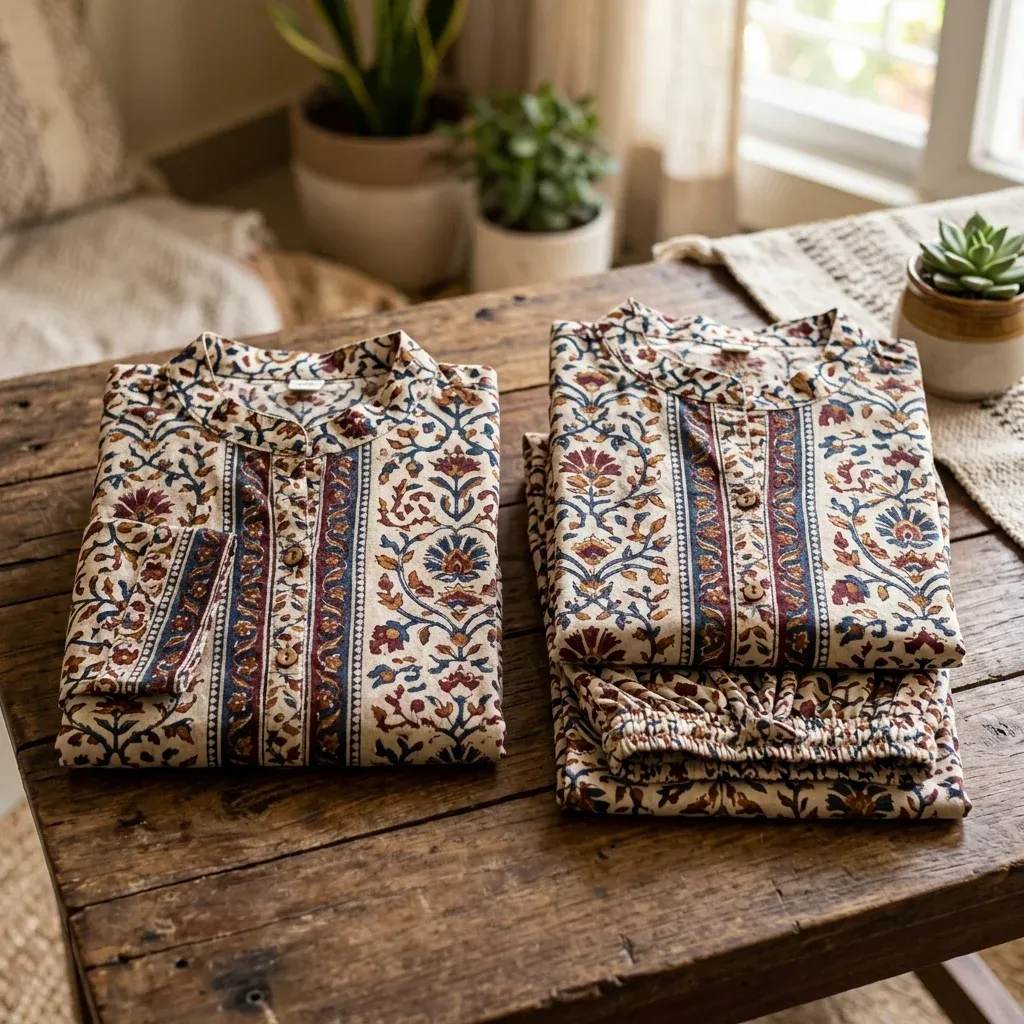
Customers say "kurti" when they mean a set, and "suit" when they mean a kurti. As a retailer this matters because each product type has a different ticket size, margin profile, and customer occasion. Stock the wrong mix and you'll sit on inventory that doesn't move.
1. What is a kurti, and who is it for?
A single top, usually knee-length or longer, meant to be paired with leggings, palazzos, or jeans the customer already owns. It's the highest-volume, lowest-ticket item in ethnic wear.
- Buyer: daily-wear and office-wear customer.
- Ticket size: low — but turns over fast.
- Margin: healthy in percentage terms, modest in absolute rupees.
- Stock it when: you need footfall and repeat visits.
2. What is a kurti set, and why does it sell so well?
A kurti plus a matching bottom (legging, palazzo, or pant), sometimes with a dupatta. The customer gets a coordinated look without having to match anything herself. This is the sweet spot of modern ethnic retail.
- Buyer: festival, family-function, and gifting customer.
- Ticket size: roughly 1.5–2x a kurti.
- Margin: better than kurti alone, because the bottom carries extra value at low extra cost.
- Stock it when: you want to lift average bill value without losing the everyday buyer.
The kurti set is where most ethnic-wear stores make their real money — the convenience premium is large and the customer perceives high value.
3. What is a suit set, and when should you stock it?
A fully-finished three-piece: top, bottom, and dupatta — often with heavier work, better fabric, and a more formal silhouette (think straight-cut or Anarkali suits). This is your premium, high-ticket offering.
- Buyer: wedding, festival, and special-occasion customer.
- Ticket size: 2–4x a kurti.
- Margin: strong in absolute rupees, but slower turnover — buy fewer, choose carefully.
- Stock it when: you have a wedding-season or festival audience that will pay for finish and fabric.
So — what should you stock in your ethnic-wear store?
A useful starting split for a small-to-mid ethnic store, adjusted to your local customer:
- ~50% Kurtis — to drive footfall and repeat visits.
- ~35% Kurti Sets — to lift ticket size and carry margin.
- ~15% Suit Sets — for occasion buyers, kept lean to avoid dead stock.
If your store is in a wedding-heavy market (Punjab, Delhi NCR, parts of Gujarat), shift toward more suit sets. If you serve an office-going or college crowd, lean heavier on kurtis and co-ord sets.
You can see exactly how each category looks side by side in our kurti and suit-set ranges.
The bottom line
Kurti brings them in, the kurti set pays the rent, and the suit set earns the profit on the big occasion. Stock all three in proportions that match your customer — not a single category in isolation. To stock from a supplier who carries all three under one roof, see how we work.