GST on textiles is one of the most asked-about topics among garment retailers, and also one of the most confused. The good news: once you understand three things — the rate slabs, the threshold, and input tax credit — most of the confusion disappears. This article explains the general framework as we understand it; it is not tax advice. Always confirm current rates with your CA.
1. What are the GST rates on garments?
Ready-made garments and made-up textile articles broadly fall into two slabs:
- 5% GST on specified apparel with transaction value up to Rs 1,000 per piece.
- 12% GST on specified apparel with transaction value above Rs 1,000 per piece.
Fabric (un-stitched, sold by the metre) is taxed differently — typically 5% — which is why the rate can change between when you buy fabric and when you sell a stitched garment.
2. How does the Rs 1,000 GST threshold work?
CBIC's published FAQ says the threshold refers to the transaction value, not the retail sale price printed on the garment. Classification and valuation can depend on the exact product and transaction, so confirm the current treatment before issuing an invoice.
Do not infer the GST slab from MRP alone. Record the correct HSN, transaction value and applicable rate on the tax invoice.
What changes when you cross the line
It's not just more tax. At 12%, the absolute tax amount is larger, your working-capital requirement rises, and your customers feel the price jump. For value ethnic wear, staying under the threshold is often a deliberate pricing decision.
3. What is input tax credit (ITC) and how do I claim it?
When you buy stock from a GST-registered wholesaler (like BrownBarry), the invoice they give you contains tax you've already paid. This is your input tax. When you sell to your customer and collect GST, that's your output tax. You file and pay only the difference: output minus input.
This is why buying from a supplier who gives you a proper GST invoice is so important — without it, you cannot claim ITC, and you end up paying tax twice on the same goods.
- Always insist on a tax invoice from your supplier (not just a delivery challan or WhatsApp note).
- Match the supplier GSTIN on the invoice against what shows up in your GSTR-2B before you claim credit.
- Reconcile regularly — claiming ITC on an invoice your supplier never uploaded gets reversed later, with interest.
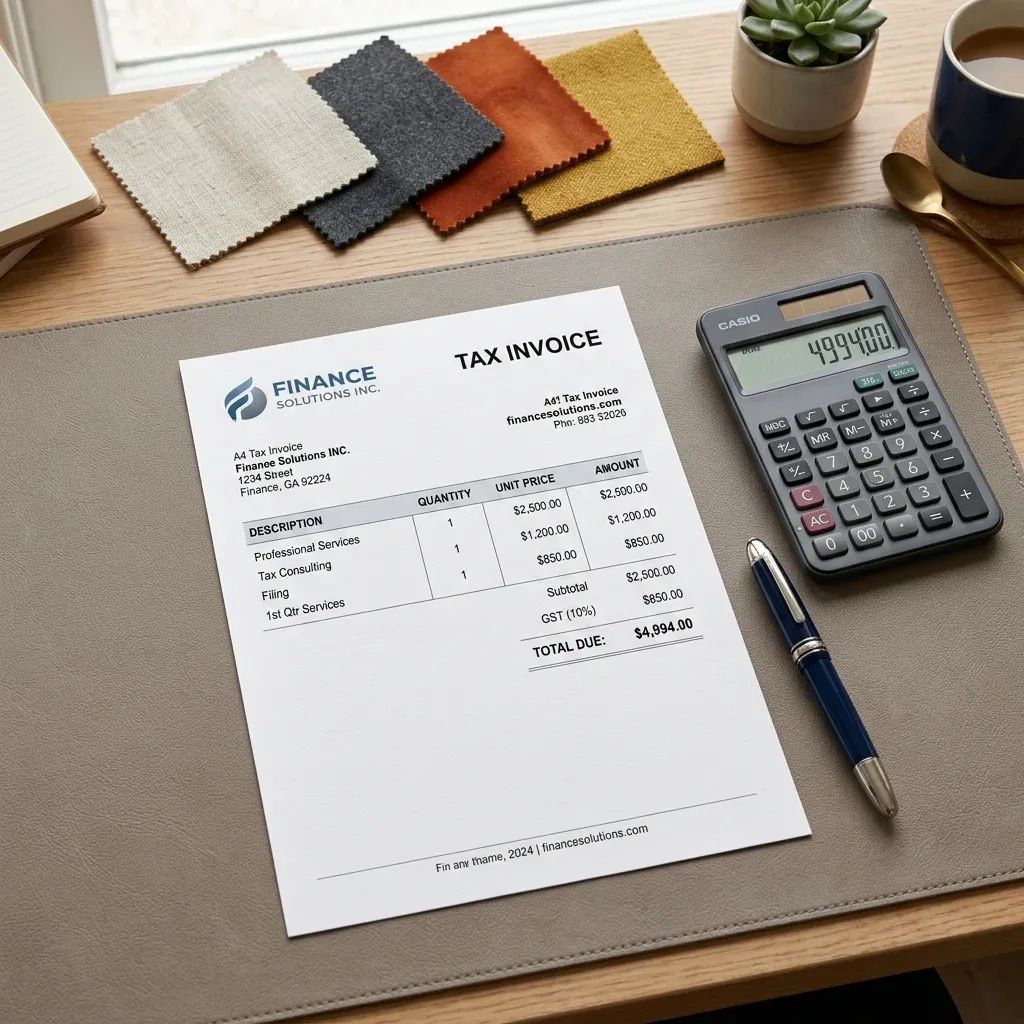
4. What should a garment retail GST invoice contain?
- Your business name, address, and GSTIN.
- A unique, sequential invoice number and date.
- Customer name and address (GSTIN if they're a business buying B2B).
- Item description, HSN code (usually 6109/6104/6110 range for knitted garments — confirm with your CA), quantity.
- MRP (mandatory for retail garments under the Legal Metrology rules) and the selling price.
- Taxable value, GST rate, and tax split (CGST + SGST, or IGST).
- Total amount, rounded off, and the word "Tax Invoice".
5. What common GST billing mistakes should retailers avoid?
- Using printed MRP instead of the applicable transaction-value and classification rules.
- Claiming ITC without a matching supplier invoice in GSTR-2B.
- Issuing a "bill" without your own GSTIN once you're registered.
- Mixing up CGST/SGST (intra-state) with IGST (inter-state) when buying from another state.
The bottom line
Confirm the current slab and classification, claim ITC only when eligibility and records support it, and keep the tax invoice complete. For BrownBarry's ordering and invoicing process, read how we work.
Official sources and review date
Reviewed: . This article is general information, not tax advice.